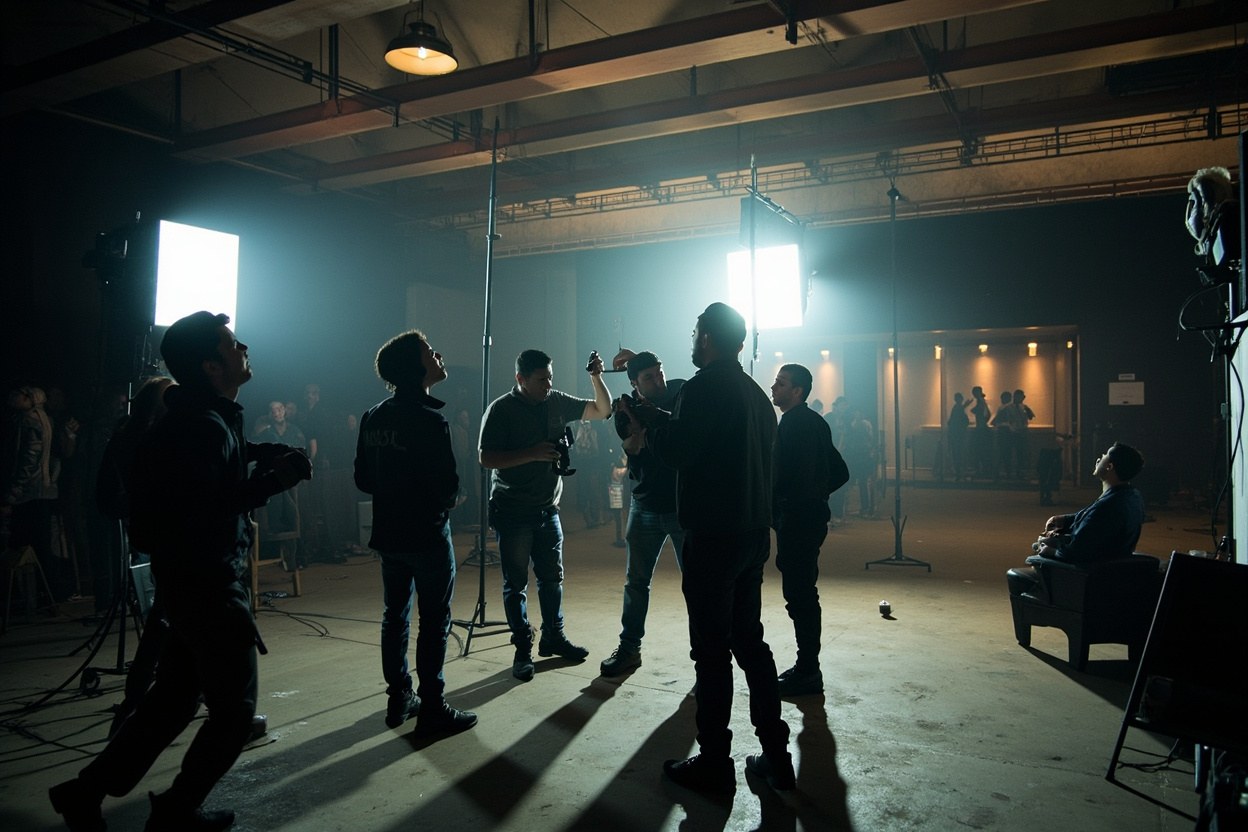
In short In short answer: For a commercial shoot inside a private venue in Dubai in 2026, producers should obtain the venue owner’s written filming consent, confirm that the property is not restricted for filming, secure the relevant Dubai production permissions, and coordinate the building’s safety, noise, insurance and operational requirements before equipment arrives. This guide covers the practical venue side of a Dubai shoot. It does not replace approval from Dubai’s filming authorities, the venue owner, or any relevant building, aviation, road, police or event authority.
Last reviewed 13 November 2026. This is general planning guidance, not a statement of current rules. Confirm requirements with the filming authority and the venue.
What counts as a cinematic venue permit in Dubai?
Filming permits in Dubai are handled by the Dubai Films and Games Commission, which succeeded the Dubai Film and TV Commission under the Dubai Media Council. The permit portal and some forms may still use the older name, so confirm the current route before applying.
A cinematic venue permit is not usually a single citywide ticket for every interior shoot. It is the combined result of several permissions and operational agreements. These commonly include a Dubai filming permission for the activity and location, the private property or venue owner’s consent, and the building operator’s rules for load-in, access, power, noise and working hours.
For a commercial production, the answer may also depend on the product being filmed. A fashion campaign, corporate film, music video, interview, drama scene and product demonstration can require different evidence, although the venue may impose the same basic access conditions.
The practical distinction is important: the venue controls what may happen inside its property, while the relevant Dubai authority controls filming activity in the emirate. Booking a room does not remove either obligation. Conversely, receiving a general filming approval does not give a production the right to shoot inside a particular building without the owner’s agreement.
Before treating a date as secured, record:
- the exact venue name, address and filming area;
- the purpose, script, shooting method and expected duration;
- whether the recording is for commercial, broadcast, social, editorial or internal use;
- crew size, equipment, power, lighting, vehicles and public access needs;
- whether the production involves minors, performers, crowds, drones, special effects, food, stunts, music or a temporary set;
- the venue’s insurance, confidentiality, cancellation and restoration requirements.
Keep all approvals in one location, including email confirmation, the approved call sheet and any conditions attached to the location agreement. A short venue consent document should state that filming is permitted on defined dates, identify the spaces involved and explain any restrictions on use of the venue name or imagery.
The pre production approval sequence
A reliable sequence begins before the creative team locks the location. The producer should first establish whether the space can host the intended filming. This includes checking whether the venue allows filming at all, whether the owner allows commercial recordings and whether the building’s access policies can accommodate the crew.
Next, prepare a concise location pack. It should contain a script summary, storyboard or shot list, floor plan, dates, crew breakdown, equipment list, power requirements, lighting proposal, vehicle plan, safety plan, insurance certificate and intended distribution. The aim is not to overload the venue, but to give it enough information to assess operational effects.
Then submit the applicable filming request through the relevant official Dubai channel. The submission should match the actual activity. Altering the description from an interview to a commercial production, or adding a drone, exterior night work, road access or crowd activity after approval, can trigger a fresh review.
Only after the authority and venue positions are clear should the producer issue the final call sheet. A good call sheet includes:
- venue and exact shooting area;
- parking and load-in instructions;
- call time, crew call time and wrap time;
- lighting and grip equipment;
- power and generator arrangements;
- noise, access and security contacts;
- weather and contingency plans;
- venue contact details and emergency procedure.
Last reviewed: 13 November 2026. The sequence above is a production planning method, not a promise that every project follows the same route. Confirm the current submission route and document list for the specific emirate and activity.
Venue owner consent and building access
The venue owner’s consent should be explicit. A restaurant, office tower, hotel, mall, warehouse, school, hospital or private residence may have different policies, and approval from a booking agent is not necessarily approval from the person authorised to permit filming.
Ask for permission to film the identified rooms, common areas, exterior approaches and any views that will appear. Clarify whether the venue’s logo, artwork, décor, signage or distinctive architecture may appear in the finished content. For a brand production, this is also the point to confirm how the venue imagery will be used.
Building operations will usually want to understand the practical impact. Relevant questions include:
- What are the permitted load-in and load-out times?
- Can cases and carts use lifts, corridors or service entrances?
- Which parking bays and loading zones are available?
- Will power be drawn from the building, or will a generator be required?
- Are stands, clamps, cable routes or lighting attached to walls, ceilings or floors?
- What noise level is acceptable during business hours?
- Must the production use a lift supervisor or building marshal?
- Are security passes, access cards or escorts required?
- Can filming take place after normal trading hours?
For filming in a live workplace, consider customer or visitor privacy. Signage alone may not provide a lawful basis for using identifiable people in commercial content. Producers should plan how background extras will be directed, how customers will be informed and how incidental use of private or confidential spaces will be prevented.
The venue agreement should also address the condition in which the space must be returned. Photographic or production damage may need to be documented with a joint pre shoot walk-through. The venue may require a deposit, insurance certificate, additional indemnity or removal of all tape, rig points, dust and waste before wrap.
Insurance is part of the permission package
Filming insurance should be reviewed against the actual production rather than accepted as a generic certificate. The certificate may state a broad activity, but exclusions or conditions can matter. Ask the broker to confirm cover for commercial filming, broadcast or online distribution where applicable, filming at the named location, equipment, crew, public liability, third party property and any elevated or specialist activity.
Some venues require the production to name the owner as an interested party or additional insured, or provide a waiver of subrogation. That wording must be issued by the insurer or broker and should not be improvised in an email. Check the minimum limits shown by the venue, then check whether the location’s value, rigging activity, crowd presence or special effects create a different requirement.
Do not assume the producer’s existing annual policy automatically covers a one-off commercial shoot. Conversely, avoid buying duplicate cover without reviewing the policy schedule. A short pre shoot declaration should identify:
- the insured production company;
- the shoot title and activity;
- the dates and location;
- the distribution or usage, if material;
- crew, equipment and any special effects;
- the venue’s required wording and limits.
Disagreement to note: venue teams sometimes describe a document as an “insurance certificate”, while brokers distinguish certificates, endorsements, additional insured wording and full policies. Accept the document the venue actually requires, and have the broker confirm that it responds to the clause, rather than relying on the label.
Noise, power and filming after hours
Interior filming can create issues that are not visible on a shot list. Generators, air conditioning, lifts, security systems, alarms and amplified sound can all affect a location. If the work falls outside normal operating hours, the venue may require extra security, building staff or cleaning costs.
Agree a method for recording dialogue. If the building cannot be fully silenced, test the room with the intended microphone and backup recording approach. Coordinate with the venue before adding ambient tracks, particularly in hospitality, healthcare, education and residential environments.
Power planning should start with the venue’s load-in rules, not only the distribution board. Ask whether an existing supply is suitable for LED lighting and camera systems, what cables may be used, where isolation and residual current protection are required, and whether a generator needs an acoustic or exhaust plan. A generator placed near an entrance, occupied room or air intake may create a new problem.
For night work, document the arrival route, security handover, emergency lighting and the production’s own lighting. Make sure the venue can identify which lights will be switched off and for how long. A controlled “lights out” window should appear in the call sheet, with the venue confirming who authorises it and who restores the building systems.
Exterior approaches, street filming and vehicle access
Shooting an interior may still involve an exterior. A crew may need to unload outside, park a unit, place a stand in a forecourt, work on a pavement or capture a building façade. Those activities can require separate coordination with the relevant road, transport, security or filming authority.
Provide a small logistics plan with the venue’s approval. It should show the unit and car sizes, parking arrangement, loading bay, loading times, pedestrian management and proposed routes. If a large unit blocks a fire route or service entrance, the venue is unlikely to permit it even where the interior booking is complete.
For public-facing exterior work, think about permissions for filming, filming from public space, temporary signage, road occupation and commercial filming. These are different questions. The answer should be recorded against the precise activity rather than a general statement that “outdoor filming is approved”.
If the frame includes a protected or sensitive site, the producer may need a plan for avoiding accidental recording of restricted areas, neighbouring property or passing members of the public. A site recce should identify alternative angles and safe contingency positions.
A practical pre shoot checklist
Use this checklist as a handover between the production office and the shoot team. It should be completed before the first unit arrives.
- Location: full address, contact, approved rooms, access route and parking confirmed in writing.
- Permission: official filming submission approved, with every special condition entered into the production notes.
- Venue consent: signed by a person authorised to approve filming, including commercial use and visible areas.
- Insurance: correct policy and any additional insured or waiver wording confirmed by the broker.
- Safety: risk assessment covers the specific set, equipment, public, heat, manual handling and any special effects.
- Power: source, distribution, cables, backup and generator arrangement tested or approved.
- Noise: permitted hours, quiet periods, method for checking levels and any advance notice required.
- Privacy: customers, staff, passers-by, signage and sensitive areas addressed.
- Access: passes, escorts, lift bookings, loading bays, keys, parking and emergency contacts issued.
- Contingency: alternative indoor position, delayed access, equipment failure and weather plan recorded.
- Wrap: condition check, rubbish removal, cable and tape check, final sign-off and return of access materials.
One often missed step is checking whether the venue’s content approval clause is workable. A right to review the final edit can delay delivery and may not be compatible with a fixed campaign deadline. If approval rights are required, limit them to accuracy or venue brand rules rather than creative control, and make the turnaround period explicit.
How to avoid a last minute venue problem
The safest production is the one where the venue, authorities and producer use the same version of the plan. Circulate a short approval sheet after each stage and ask the venue to highlight differences. If the creative brief changes, notify every party in writing and check whether the filming permission must be amended.
Keep a dedicated approvals folder with the application, receipt, authority conditions, venue consent, insurance, risk assessment, recce photographs, call sheet and contact list. This is particularly important when the location is hired through an agency or when several departments have approved different parts of the shoot.
On the day, appoint one person to liaise with the venue. That person should not also be responsible for creative decisions that could conflict with the building’s rules. A simple start-of-day meeting can settle the loading route, filming zones, restricted rooms, noise expectations, emergency contacts and the plan if an area becomes unavailable.
Finally, treat the venue as a production partner rather than simply a backdrop. Staff often know the best light, the real operating hours and the spaces that cannot be captured. Their knowledge can prevent a reshoot, provided the permission boundary remains clear.
Questions
- Does a Dubai filming approval allow us to film inside any venue?
- No. It may cover the activity and location under stated conditions, but the venue owner or authorised operator must also permit filming on its property.
- Can we shoot in a venue during normal opening hours?
- Sometimes, but the venue must approve filming within its operating rules, including access, customer privacy, noise, equipment and any impact on trading.
- What should we request from a Dubai venue before booking?
- Request written confirmation that filming is allowed, the approved areas and dates, insurance requirements, access times, power arrangements, noise limits, crew limits and restoration conditions.
- Is a standard public liability certificate enough for filming?
- It may not be. Confirm that the policy covers the intended commercial filming and ask the broker whether the venue needs additional insured status, a waiver or other specific wording.
Sources
Planning something in the UAE?