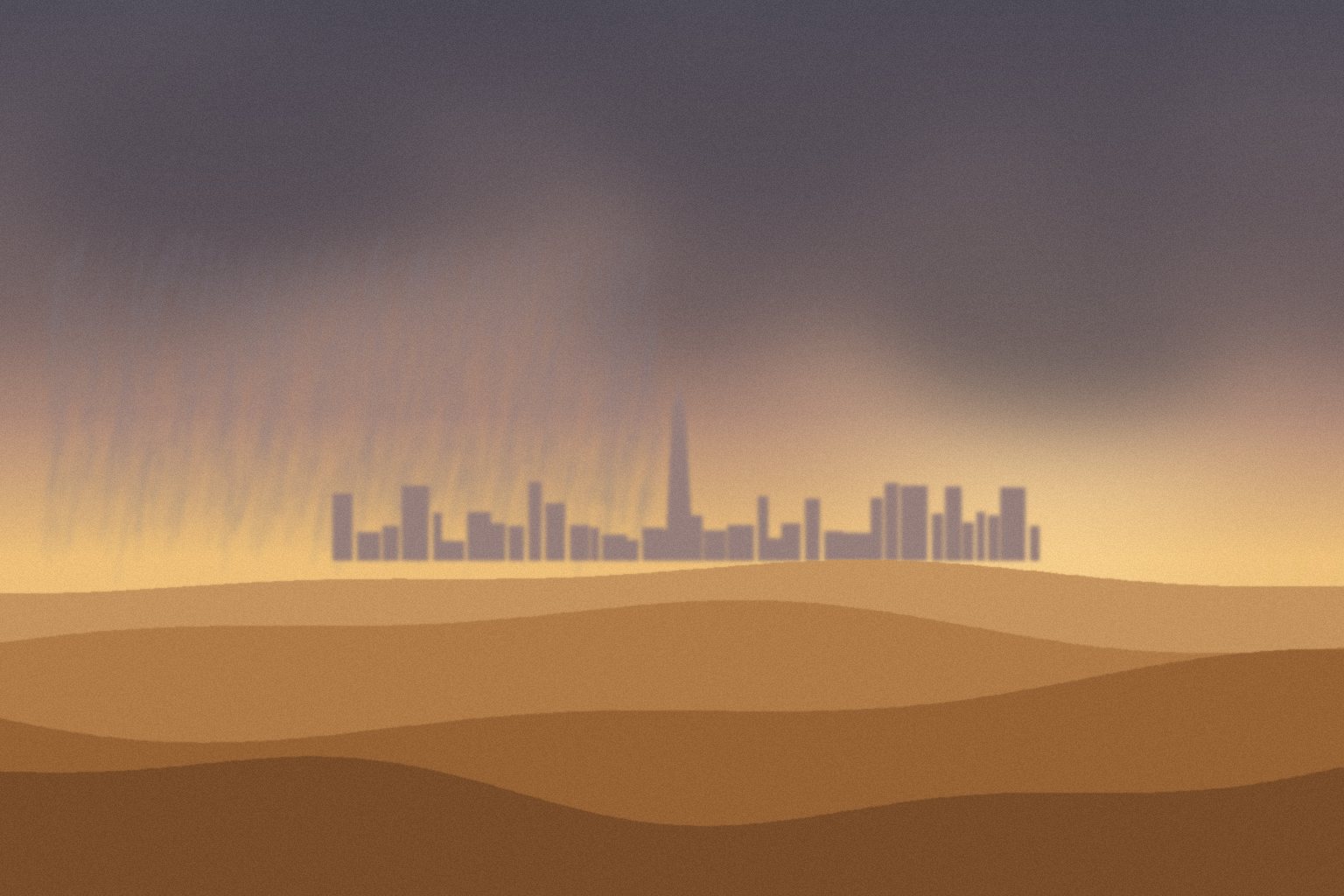
In short: Dubai's outdoor shooting and event season runs roughly from October to April, and this year the National Centre of Meteorology (NCM) puts a 99% probability on El Niño lasting from October 2026 to February 2027, with temperatures and rain near to above seasonal averages. That does not mean floods; the NCM has said so plainly. It does mean every outdoor day between November and March should carry a wet-weather plan, and early October mornings should allow for fog.
Published 24 September 2026. Carving Dreams, Dubai.
Last checked against the sources below: 24 September 2026.
Astronomical autumn began at 04:05 UAE time on 23 September. On the same morning the NCM had red and yellow fog alerts out for coastal and inland areas until 08:30, and Dubai's forecast high was still 39°C, according to Khaleej Times' report of the NCM forecast. That is the shape of the next few weeks: hot afternoons, humid nights and murky mornings, easing towards the comfortable months when most outdoor production and events in Dubai happen.
This year there is an extra variable. El Niño, the warming of the eastern Pacific that shifts weather patterns around the world, is running strong, and the NCM has published a seasonal outlook for the UAE that reaches into spring 2027. Producers, planners and couples who have booked outdoor dates this winter have been asking what that means. This note sets out what the forecasters said, what the long-term averages show, and how we would plan around it.
What did the NCM actually forecast?
Three statements matter, and they are more measured than some of what circulated on social media in early September.
- The seasonal outlook (reported 7 September). The NCM gave a 99% probability of El Niño continuing from October 2026 through February 2027, with temperatures and rainfall near to above seasonal averages between October and February, and effects on the UAE possibly running to April 2027, as Gulf News reported.
- The clarification (11 September). After posts predicting floods spread online, the NCM said the effect on the UAE is indirect, that the weather is stable and monitored continuously, and that any significant weather would be announced in advance through official channels. It said the country could see more rain, occasionally heavy when conditions allow, according to The National.
- The meteorologist's caveat (17 September). NCM meteorologist Ahmed Habib told Khaleej Times that some models point to above-average rain from October and November until January, and that "nobody can give the exact amount with certainty".
Read together, the forecast is a tilt in the odds, not a prediction for any particular week. A slightly wetter winter in Dubai still means mostly dry days. What changes is how much weight a sensible schedule gives to the wet ones.
What does a normal Dubai winter look like?
Start with the baseline. The World Meteorological Organization's World Weather Information Service publishes the NCM's climate averages for the Dubai station. They are old averages, from 1974 to 1991, and the climate has warmed since, so treat them as the shape of the year rather than a promise.
| Month | Average high | Average low | Average rain | Rain days |
|---|---|---|---|---|
| October | 35.1°C | 22.7°C | 0 mm | 0 |
| November | 30.5°C | 18.3°C | 1.8 mm | 0.3 |
| December | 26.2°C | 15.4°C | 14.3 mm | 2.0 |
| January | 24.0°C | 13.7°C | 11.3 mm | 1.8 |
| February | 24.6°C | 14.5°C | 35.7 mm | 3.7 |
| March | 27.9°C | 17.0°C | 22.4 mm | 3.8 |
| April | 32.4°C | 20.1°C | 7.6 mm | 1.6 |
Two things stand out. First, the rain is concentrated: on these averages, December to March holds almost all of the year's rain, spread over only a handful of days a month. Second, those few days can be large. On 16 April 2024 the NCM recorded 254.8 mm in 24 hours at Khatm Al Shakla near Al Ain, and 144 mm fell at Dubai International Airport, the second highest daily total on record there, according to a peer-reviewed study of the event. The same study puts the UAE's national mean annual rainfall at about 100 mm. One storm can deliver more than a normal year.
That is the planning problem in one line: rain in Dubai is rare, but when it comes it can stop a city for a day or more, and a strong El Niño year shifts the odds towards more of it.
Which months are best for filming outdoors in Dubai this season?
With the averages and the forecast side by side, the season breaks into four parts.
- Late September to mid-October: hot, humid, foggy mornings. Highs are still well into the thirties, and the sea is warm after summer, which feeds humidity and fog. The National notes that most residents feel the change around mid-October. Exterior work is possible early and late in the day; the middle of the day belongs in a studio or an interior.
- Mid-October to November: the most reliable window. Averages fall from the mid-thirties to about 30°C, and October and November are the driest months of the season. If a brief has flexible dates and needs several exterior days in a row, this is where we would put them.
- December to February: the best light and the most rain risk. Comfortable all day, softer winter light, and the peak of the rain season. This is exactly the stretch the NCM expects El Niño to push towards wetter than average. Book it, but book it with a plan B.
- March and April: warming up, rain still possible. March is still one of the wetter months on the averages, and the NCM has said effects could run to April 2027. By April, afternoon heat is back as a factor.
If the story needs a real place and the dates cannot move, look hard at whether a studio can carry part of the day. A studio does not care about the forecast, and a split day (location in the best light, studio in the hot or wet part) is often the cheapest insurance there is.
How do you plan an outdoor shoot around the rain risk?
Nothing here is exotic. It is the discipline London or Mumbai crews apply every day, applied in a city where people are not used to needing it.
- Hold a weather day. For any schedule with more than one or two exterior days between December and March, keep one contingency day in the calendar, with crew, talent and kit holds that can move to it. It costs less than a lost day.
- Pair every exterior with a cover set. Scout an interior, a covered courtyard or a stage near each exterior location, so a wet morning becomes a schedule swap rather than a cancellation. Our location scouting brief always asks what the cover option is.
- Ask about moving dates before you sign. Private locations set their own terms, and your filming permit is issued for the locations and dates you apply for. Know before the shoot what it takes to move a day, and who has to agree.
- Watch the NCM, not social media. The NCM said it will announce significant weather in advance through its official channels. Its forecasts and colour-coded alerts are the ones to act on; forwarded screenshots are not.
- Decide the night before, with a clear trigger. Agree in advance what forecast or alert moves the day, and who makes the call by what time. A crew that learns of a change at the unit base has already cost you the morning.
- Protect the kit. Rain covers, sealed cases, and a dry, shaded staging area on every exterior. Wet sand and electrics do not mix.
What about fog, heat and humidity in early autumn?
Rain gets the headlines, but for the next six weeks the more likely problems are fog and heat.
Fog. Autumn mornings in the UAE are often thick with fog because the sea is still very warm and the nights humid. The NCM's red and yellow fog alerts on 23 September ran until 08:30. For a sunrise call at a skyline or beach location, that can mean the sky you scouted is not there until the light has gone hard. Build some slack into sunrise setups and have a second shot list for the first hour.
Heat. The UAE's midday break for outdoor workers, which bans work in direct sunlight between 12:30 and 15:00 from 15 June to 15 September, ended for 2026 on 15 September. The end of the rule is not the end of the heat. Early October afternoons can still pass 35°C, so shade, water and rest breaks stay on the call sheet, and hot and cold food handling on set matters. See our notes on on-set catering for how that is organised.
Drones. Weather limits apply in the air too. Fog cuts visibility, and a rain day often means a wind day. The permissions for aerial work are covered in our drone filming guide; the practical point for this season is to schedule aerials with a backup date, because a flight approval does not make the weather flyable.
Weddings and outdoor events: what should planners do differently?
Winter is also Dubai's outdoor wedding and event season, and an event has less room to move than a shoot. A shoot can swap a day. A wedding with guests flying in usually cannot.
- Put a covered option in the venue contract. For a garden, beach or desert event between December and March, the key question to a venue is where the event goes if it rains, and whether that space is held for you or only offered if free.
- Tent and power specs. If a marquee is the plan B, confirm it is rated for wind as well as rain, and that power and lighting run safely in the wet.
- Catering that can move indoors. Outdoor stations, live cooking and dessert tables need a covered fallback. Our event catering page covers what a caterer needs on site.
- Keep the paperwork dates aligned. A civil marriage appointment and the event itself are separate things, and the event may need its own permit once the venue is booked. The legal side is in our destination wedding guide.
For couples choosing a date now, the averages say late October and November are the safest for an outdoor ceremony, and they come before the wetter months the NCM is watching.
Dates in the season that affect schedules
Weather is not the only thing that moves a shoot in winter. The official UAE public holiday list sets National Day as 2 and 3 December; public holidays can affect government processing times and the availability of locations and crews. Islamic holidays follow moon sighting, so their dates are confirmed close to the day, and the country's announcements should be checked before locking any schedule near them.
The paperwork timeline also still applies whatever the weather. A scripted project needs script approval, which can take up to 25 business days, before the filming permit. The order is set out in how to film in Dubai. Plan the calendar so a weather day does not push a shoot outside the window you have clearance for.
The short version for a producer
Book October and November for the exteriors that matter most. Use December to March for the light, with a weather day and a cover set. Treat early mornings in the next few weeks as foggy until proven otherwise. Follow the NCM directly. If you are bringing a brief to Dubai this winter, send the dates and the list of exteriors to lata@carvingdreamsevent.com and we will look at where the weather risk sits.
Questions
- Will El Niño cause flooding in Dubai this winter?
- The NCM has dismissed social media claims of floods. It expects rain and temperatures near to above average from October 2026 to February 2027, with occasional heavy rain possible, and it says significant weather will be announced in advance through its official channels.
- What is the best month to film outdoors in Dubai?
- On the long-term averages, late October and November combine comfortable temperatures with almost no rain. December to February have the mildest days and the best light, but also most of the year's rain.
- When does the outdoor season start in Dubai?
- Astronomical autumn began on 23 September 2026, but highs were still around 39°C that week. Most people notice comfortable weather from about mid-October.
- Does the midday outdoor work ban still apply in October?
- No. The 2026 midday break ran from 15 June to 15 September. Heat still needs managing on set in early October, with shade, water and breaks.
Planning something in the UAE?