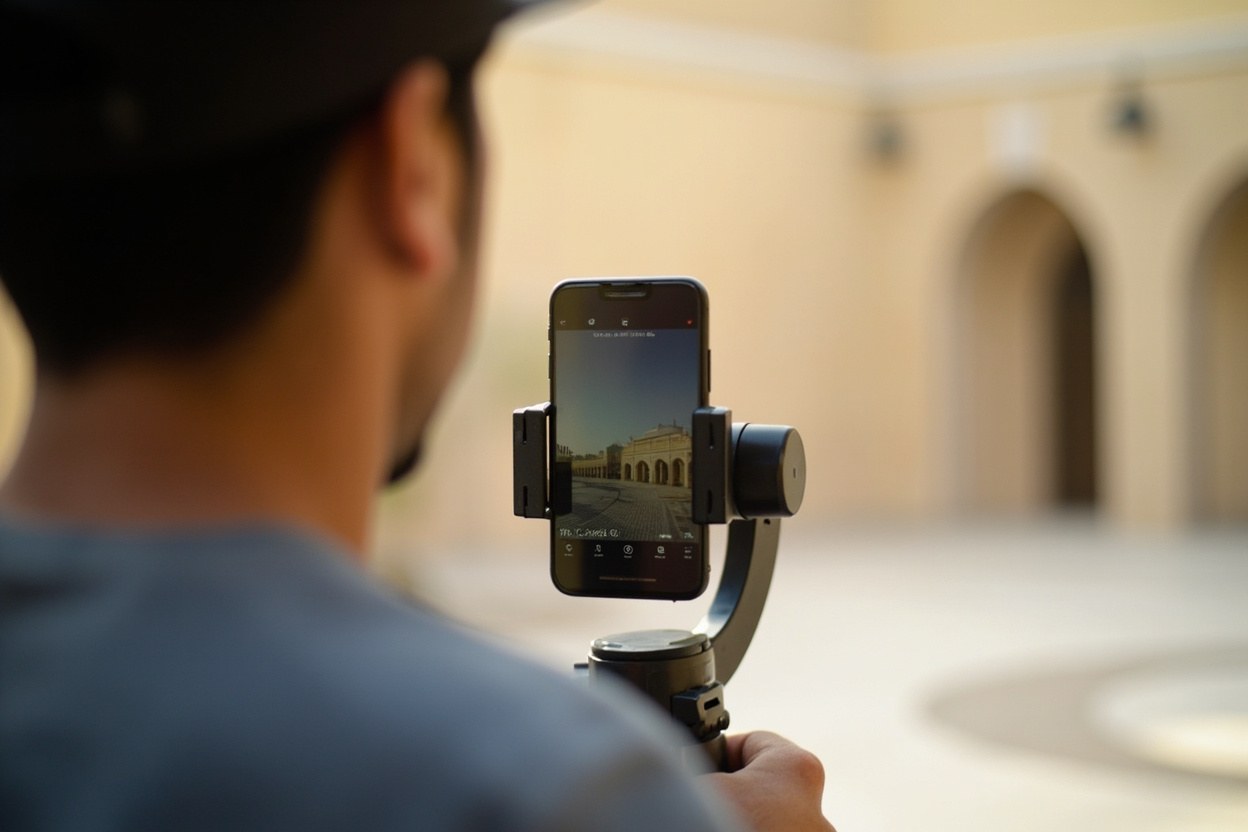
In short Short answer: Since the 1 October 2026 circular from the National Media Office, shoots that deliver only vertical 9:16 social content under 90 seconds of finished duration, captured on a single handheld device, no paid talent, no drone, no public road closure, no night work, can now use a simplified NMO digital registration instead of the standard 35A film permit. The carve out does not remove location consent, public nuisance rules, or commercial content classification. It also does not extend to client commercials, music videos, episodic work, or any shoot that wants to be archived in a brand reel longer than twelve months.
Last checked against the sources below: 6 October 2026.
What the October 2026 circular actually says
The circular is titled Short Form Vertical Social Content: Simplified Registration Pathway, dated 1 October 2026, and signed by the Director General of the National Media Office. It does not replace the existing film permit framework under Federal Law No. 15 of 2012 and the 2023 executive regulations. It sits beside it. The core test is six filters applied in order:
1. Output format. Final delivery is vertical only, aspect ratio 9:16, no horizontal or square deliverables. If the same shoot is going to be edited into a 1:1 thumbnail, a 16:9 reel, or a 4:3 corporate cut, the carve out does not apply and the shoot must use a standard film permit.
2. Duration. Each finished piece must be 90 seconds or less, measured as the total runtime of the published asset, including any opening title card. Series content is treated as one piece if it is published as a single post, and as separate pieces if it is published across multiple posts. A five part mini series delivered as five Reels counts as five pieces, but each must still independently meet the 90 second cap.
3. Capture. A single handheld device. A gimbal counts as handheld for this purpose. A tripod mounted camera does not. A second camera, even a phone on a secondary mount, makes the shoot a multi camera production and the carve out is lost.
4. Talent. No paid talent. The talent test looks at consideration, not at the presence of a person on camera. A founder speaking to camera about their own brand, an employee explaining their own work, a chef showing a recipe, are all in scope. A hired influencer with a paid rate card, even at a nominal fee, is paid talent. A brand ambassador under a separate commercial agreement is paid talent.
5. Equipment footprint. No drone, no professional lighting rigs, no track and dolly, no Steadicam, no cable cam, no temporary sets built on location. Reflectors and small battery powered LED panels under 30 watts are tolerated as part of normal handheld capture.
6. Location and timing. No road or lane closure, no public beach, no government building interior, no metro or tram corridor, no night work between 22:00 and 06:00, no pyrotechnics, no amplified sound above 65 dB at the source.
If all six filters pass, the shoot is eligible for the digital registration pathway rather than a full film permit. The registration is a short form filed on the NMO portal, takes under an hour to complete, and returns a confirmation reference within one business day. The reference must be carried on location by the lead, and any inspector can ask to see it.
What still needs a full permit even if your output is vertical
Several familiar situations remain on the permit side of the line regardless of aspect ratio.
Client paid work for an advertising agency. A paid commission from a brand to an agency to produce a campaign, even if every deliverable is a Reel, is a commercial production. The carve out is designed for organic content, not for paid media deliverables, and the NMO circular is explicit that any work delivered to a brand under a contract for services falls outside the simplified route.
Music videos. Anything synced to a published track, with the intention of being promoted as a single or part of an album rollout, uses the standard permit because the rights landscape is materially different and the rights holders are entitled to a fuller audit trail.
Episodic or recurring content. A weekly series, even if each episode is under 90 seconds, uses the standard permit because the cumulative editorial oversight brings it into the production company category. The carve out is sized for one off shoots, not for a recurring publishing commitment.
Drone work of any kind. Drone filming in the UAE continues to require a separate permit from the General Civil Aviation Authority, regardless of output format. The vertical carve out is silent on drones and the existing GCAA regime is not relaxed by it. Our drone filming permit guide covers the full 2026 picture.
Public space with foot traffic. A busy mall, a hotel lobby during peak check in, a metro station, a public beach, a government service centre: these all need the standard permit and a location agreement from the venue or authority. The simplified route is for private property with the owner's consent, or for a public area where the shoot occupies under four square metres and does not impede pedestrian flow.
Anything involving children as on camera participants. A child speaking to camera in a school uniform at a school event is fine under the carve out provided the school is the private property and the consent of the parent is documented. A child modelling a product, or a child who is not the child of the person filming, requires the standard permit because the editorial and consent review is heavier.
The line between a personal vlog and a commercial production is the part that gets producers in trouble. If the content is being paid for, or is being delivered under any kind of contract, the carve out does not apply and the full permit is required. The NMO circular uses the word consideration in the same sense as the federal media law, which is a wide term and includes in kind payment, cross promotion, and contra deals.
What changes for content creators, founders, and brand teams
The carve out is good news for the long tail of UAE based creators who were previously going through a permit process designed for a 30 person crew shooting a car commercial. A solo creator filming a 45 second Reel in their own kitchen for their own brand page no longer needs to file a 35A form, pay the permit fee, and wait three to five business days. They file a digital registration, get a reference within a day, and shoot.
For founders and small business owners, the practical effect is that the social content they always wanted to make but were put off by the bureaucracy is now genuinely within reach. A boutique owner walking through her own shop, a personal trainer filming a 60 second form check on the Corniche, a restaurant chef plating a dish in his own kitchen: all of this sits inside the carve out provided the capture rules are met. The kicker is the talent test, which excludes the obvious workaround of hiring a local creator to deliver the same content under the brand name.
For brand teams, the carve out is a partial relief and a partial headache. The relief is that the small, organic pieces in a content plan, the founder talking head, the behind the scenes at the warehouse, the quick customer testimonial in a quiet corner of a store, can now move through a faster route. The headache is that the carve out creates a new editorial category to manage, and there is a real risk of a shoot being planned as organic and then quietly delivered as part of a paid campaign, which puts the registration out of scope retroactively and can trigger a fine under the existing media law.
Carving Dreams Dubai is advising its social first clients to treat the carve out as a content planning tool rather than a production shortcut. The right way to use it is to decide at the brief stage whether a shoot is organic or paid, and to commit to the registration route only when the brief is genuinely organic. Mixing the two, even accidentally, is the path that ends in a phone call with the NMO.
How the registration works in practice
The digital registration is filed on the NMO producer portal under a new tab labelled Short Form Social. The form asks for the creator's name and Emirates ID or passport number, the brand or individual behind the content, the shoot location, the shoot date and time, a one sentence description of the content, the planned platform, and an affirmation that the six filters above are met. The form does not ask for a script, a storyboard, or a shot list. It does ask for the platform, and the platform is what triggers the classification engine that decides whether the registration is in scope.
Once submitted, the form returns a registration reference within one business day. The reference is valid for 14 days from the shoot date listed on the form. A shoot that runs over more than one day, even a three day restaurant mini series, needs a separate registration for each day or a single registration that explicitly covers the date range. The fee is AED 120 per registration, which is a meaningful reduction on the AED 2,500 to AED 7,500 range of a standard film permit.
On location, the lead must carry a printed or digital copy of the registration, the Emirates ID or passport of the lead, and written consent from the property owner if the shoot is on private property that is not the lead's own. For a public space, the consent of the relevant authority is still needed, and the simplified route does not waive that. What it waives is the advance permit processing time and the per location fee.
If an inspector visits, they will ask for the registration, check the shoot against the six filters, and may ask for a quick look at the captured footage. The inspector does not need to see the script or the edit. If the filters are not met on the day, the inspector can require the shoot to stop and the content to be deleted, and can refer the case to the NMO for a fine under the existing media law. The fine range for shooting without a valid permit is AED 5,000 to AED 50,000, and the simplified route does not soften the enforcement side.
Where this leaves production houses
Production houses have spent the last four years watching brand teams pull small social shoots in house. The carve out accelerates that trend, because the marginal cost of doing the work in house is now meaningfully lower. The honest answer is that the work that has moved in house is, in most cases, not work the production house wanted to do at the rates brands were willing to pay, and the carve out just confirms that it is the right place for it.
The work that production houses should be defending is the work the carve out does not touch: paid campaigns, music videos, episodic content, anything with a drone, anything that needs a crew of more than one, anything that needs a public space during peak hours, anything that needs a location agreement with a venue, anything that needs a permit for night work, anything that needs a permit for pyrotechnics or amplified sound. The carve out is, in effect, a clean line drawn under the work that was always going to move in house, and it removes the ambiguity that was making both sides uncomfortable.
For Carving Dreams Dubai, the carve out is a reason to have a more honest conversation with brand clients about which pieces of the content plan genuinely need a production house and which do not. We are advising our clients to use the carve out for the small organic pieces and to use us for the work that actually needs a production company, and to make the call at the brief stage rather than the shoot day. The shoots that try to use the carve out for work that should be permitted are the shoots that end in a call to the NMO, and that is not a call we want any of our clients to make.
Common mistakes we are already seeing
Three weeks into the carve out, the patterns of mistake are already clear. The first is the talent test. A brand hires a local creator to film a 60 second Reel in a coffee shop, files the registration, and gets a call from the NMO the day the Reel goes live because the creator is paid talent. The carve out does not allow paid talent, regardless of how small the fee, and the fix is either to use the standard permit or to use an unpaid employee or founder. The second mistake is the multi device capture. A creator brings a phone on a gimbal and a second phone on a small tripod for a behind the scenes angle, and the carve out is lost because the shoot is now multi camera. The third mistake is the public space assumption. A creator films on the sidewalk outside their own shop, the sidewalk is technically public, the registration is out of scope, and the footage has to be deleted. The fix is to film inside the shop, where the property owner's consent covers the space.
A quieter mistake is the editorial creep. A shoot starts as a 60 second organic Reel and the same footage is then used in a paid campaign two months later. The retroactive test is whether the content is delivered to a brand under a contract, and if it is, the original registration is out of scope and the paid delivery needs the standard permit. The cleanest way to manage this is to keep organic shoots in the organic archive and paid shoots in the paid archive, and to make the call at the brief stage rather than the edit stage.
Questions
- Does the vertical video carve out replace a filming permit in the UAE?
- No. The 1 October 2026 NMO carve out creates a simplified digital registration for shoots that meet all six filters, and a full film permit is still required for anything outside those filters, including paid campaigns, music videos, drone work, public spaces, and night shoots.
- Can I use the simplified route for a paid brand campaign?
- No. The carve out is for organic content. Anything delivered to a brand under a contract for services is a commercial production and requires the standard film permit, regardless of aspect ratio or duration.
- Does the carve out cover drone footage of a 30 second Reel?
- No. The carve out is silent on drones and the existing GCAA drone permit regime is unchanged. Any drone work, even a short social Reel, needs a separate GCAA permit on top of any other approvals.
- How long is a registration valid?
- A registration reference is valid for 14 days from the listed shoot date. A multi day shoot needs either one registration covering the date range or a separate registration for each day.
Sources
Planning something in the UAE?